
Core Meaning
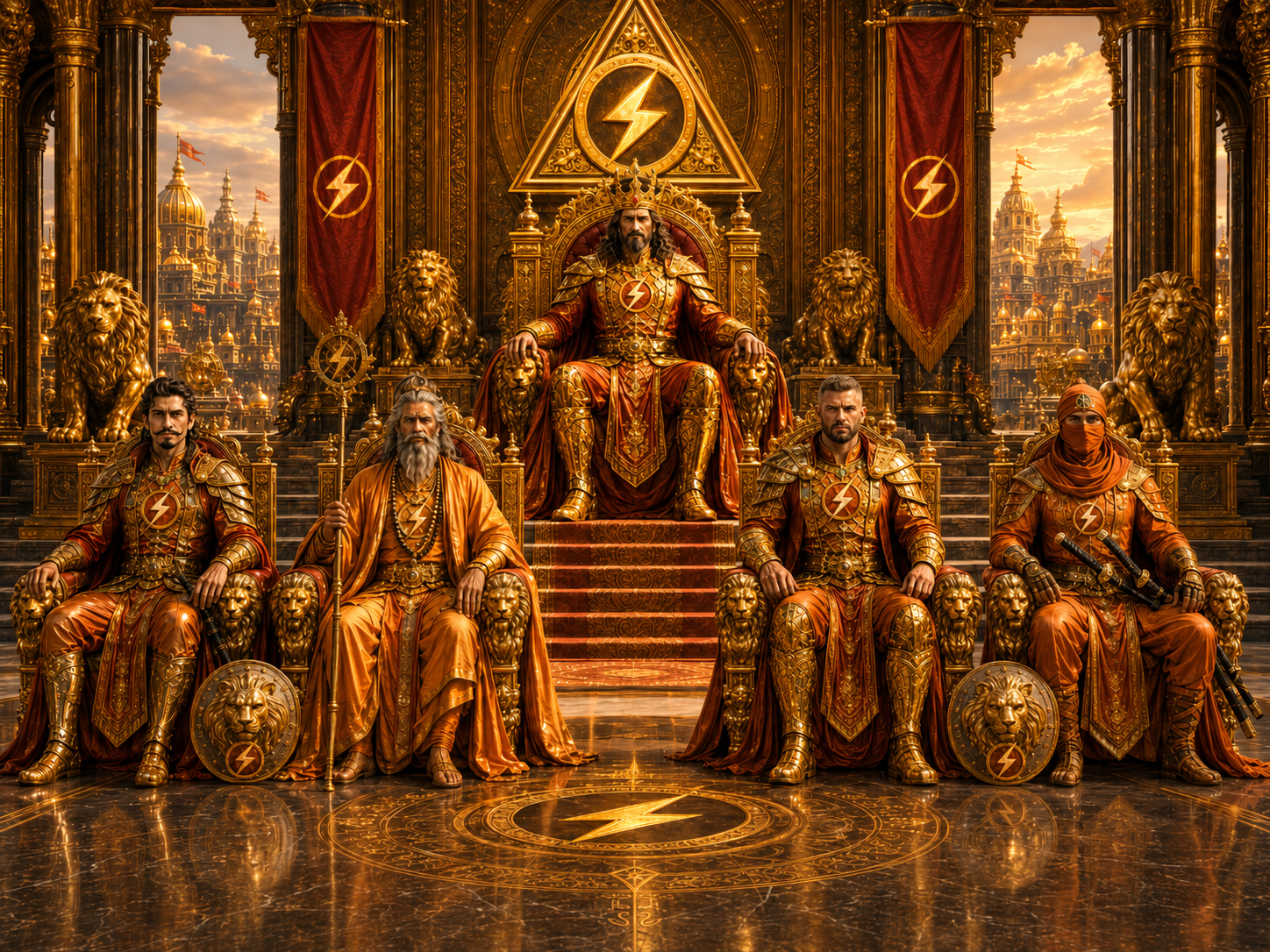
The Rajsabha is the highest working assembly of AAHA. King Manuki sits elevated, the four principals sit below in fixed positions, and advisors and petitioners face them through an ordered chamber.
Symbolic Form
The official AAHA visual language uses a golden triangle containing a circle with the Zebolt lightning mark inside and keeps every major symbol subordinate to the complete constitutional meaning.

Use in Government
The symbol or doctrine appears in laws, offices, architecture, records, armour, finance, or royal ceremony according to its role.
Use in Public Life
Aahans encounter the idea through education, festivals, civic service, protected official marks, public buildings, and stories of Golden Heroes.
Misuse and Limits
No symbol may be used to falsely claim royal authority, excuse unlawful force, forge currency, hide corruption, or place a human above accountability.
Purpose of the Collection
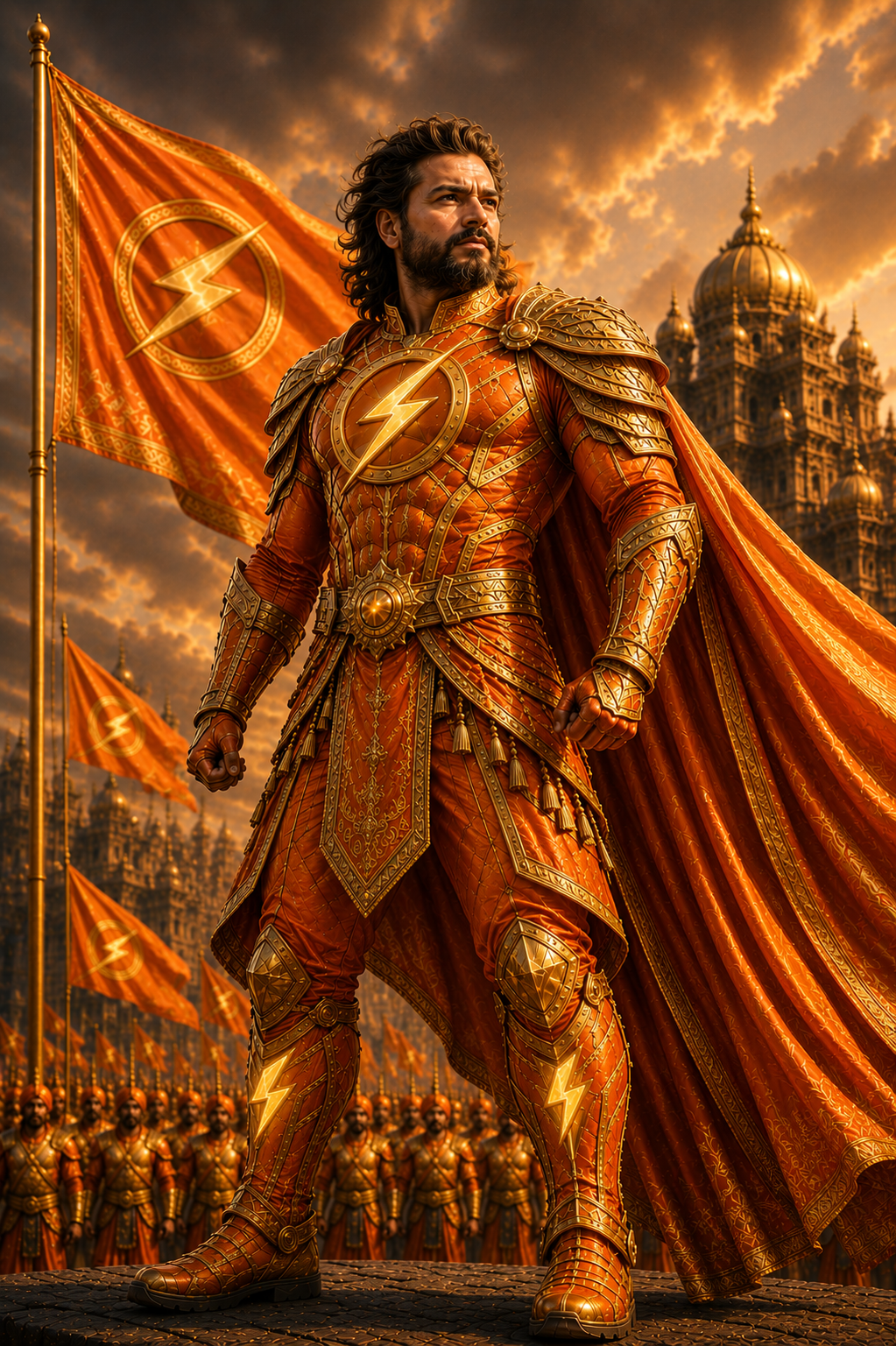
This collection presents visual interpretations of Rajsabha Artwork while preserving the established AAHA canon.
Required Visual Canon
Use the emblem as a golden triangle containing a circle with the Zebolt lightning mark inside. Keep Manuki elevated in throne compositions and preserve the fixed order Zuzuk — Rasant — King Manuki — Pumbus — Japtinja.
Human and Divine Separation
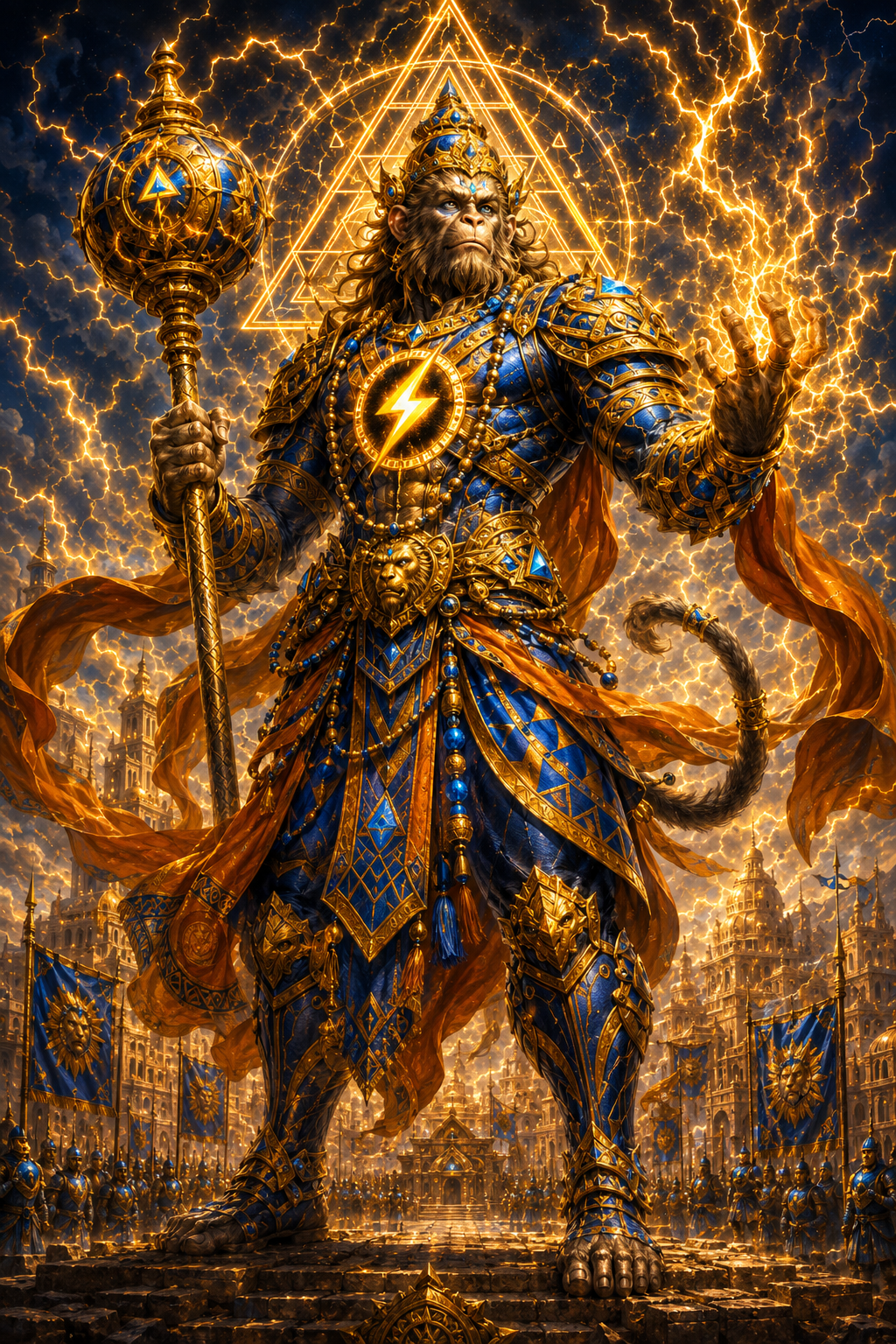
Gods must appear unmistakably divine, while Manuki, the Golden Panch, the Supreme Sage, advisors, soldiers, and citizens remain human.
Style Direction
Use cinematic golden fantasy realism, polished armour, saffron and royal red, controlled lightning, lion forms, clear facial distinction, and readable hierarchy.
What to Avoid
Avoid changing established faces, exchanging fixed seats, uncovering Japtinja, giving sacred staffs to other members, overcrowding the Rajsabha with gods, or turning government art into a worship scene.
Canonical Principles
Five minds. One kingdom. One throne.
Living Triangle: Knowledge, Prosperity, and Power
Divine Flow: Vaishno → Narsimha → Hanuman → the Supreme Sage → Rasant → King Manuki
Fixed Order: Zuzuk — Rasant — King Manuki — Pumbus — Japtinja
Power must protect. Prosperity must serve. Knowledge must guide.
Rajsabha Artwork belongs to a world in which power must protect, prosperity must serve, and knowledge must guide. Its meaning is complete only when it strengthens the Aahans, preserves the responsibility of the crown, and keeps every form of action within the disciplined circle of Zebolt.