The Pumbus Doctrine
Pumbus believes visible readiness and lawful Danda deter danger. His strength must remain proportionate, accountable, and directed toward protection rather than revenge.
Appearance and Symbolism
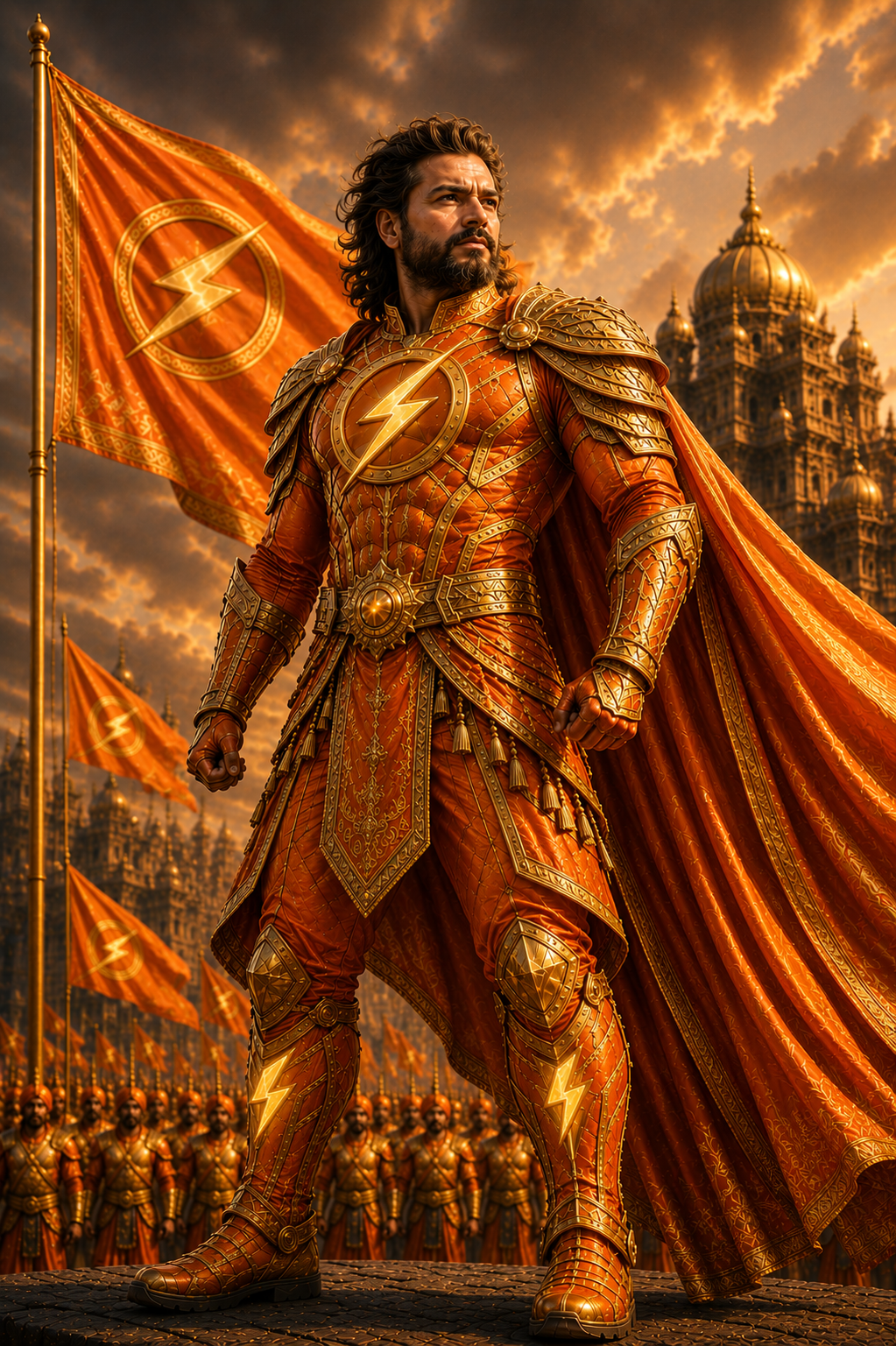
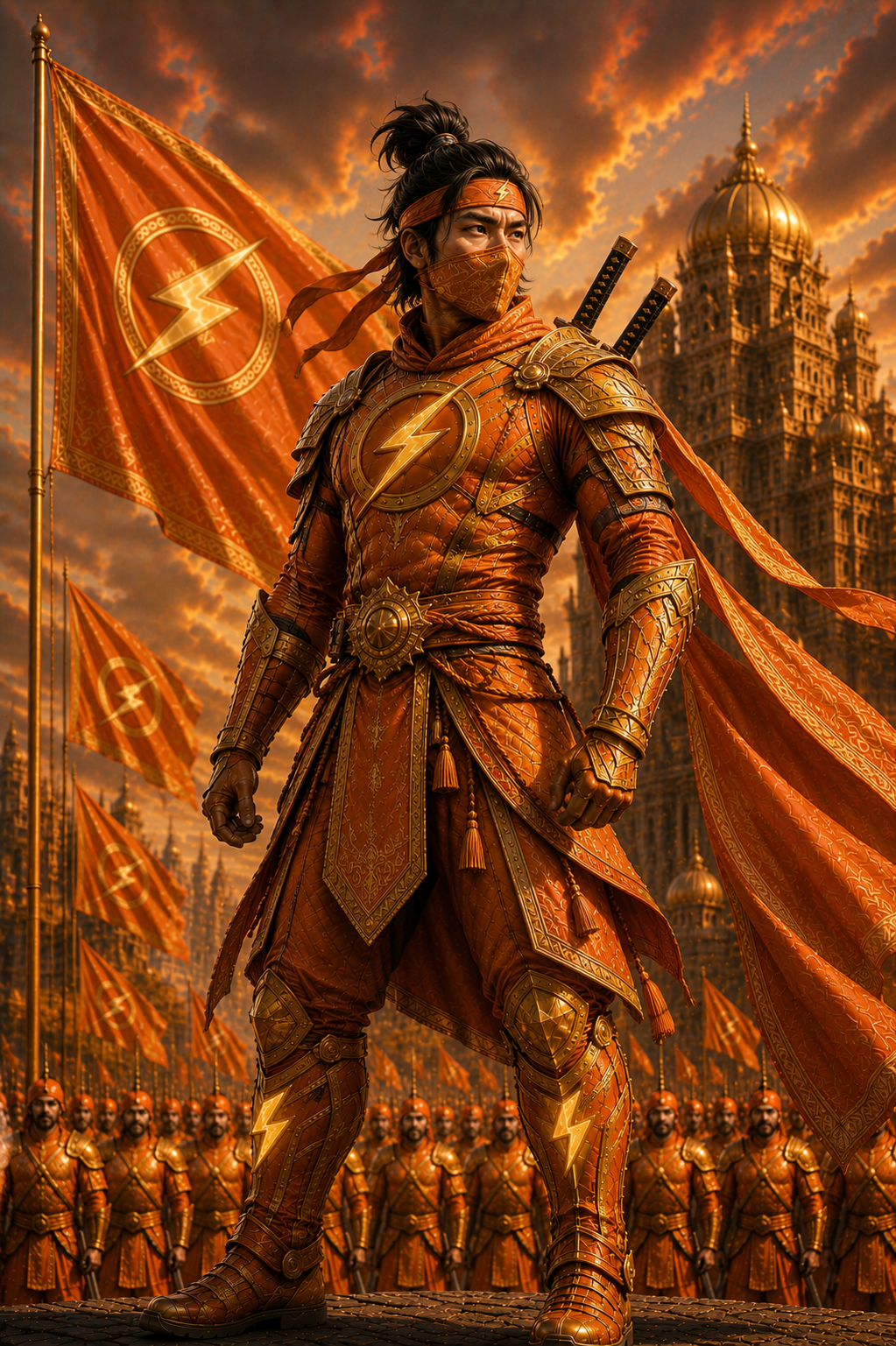
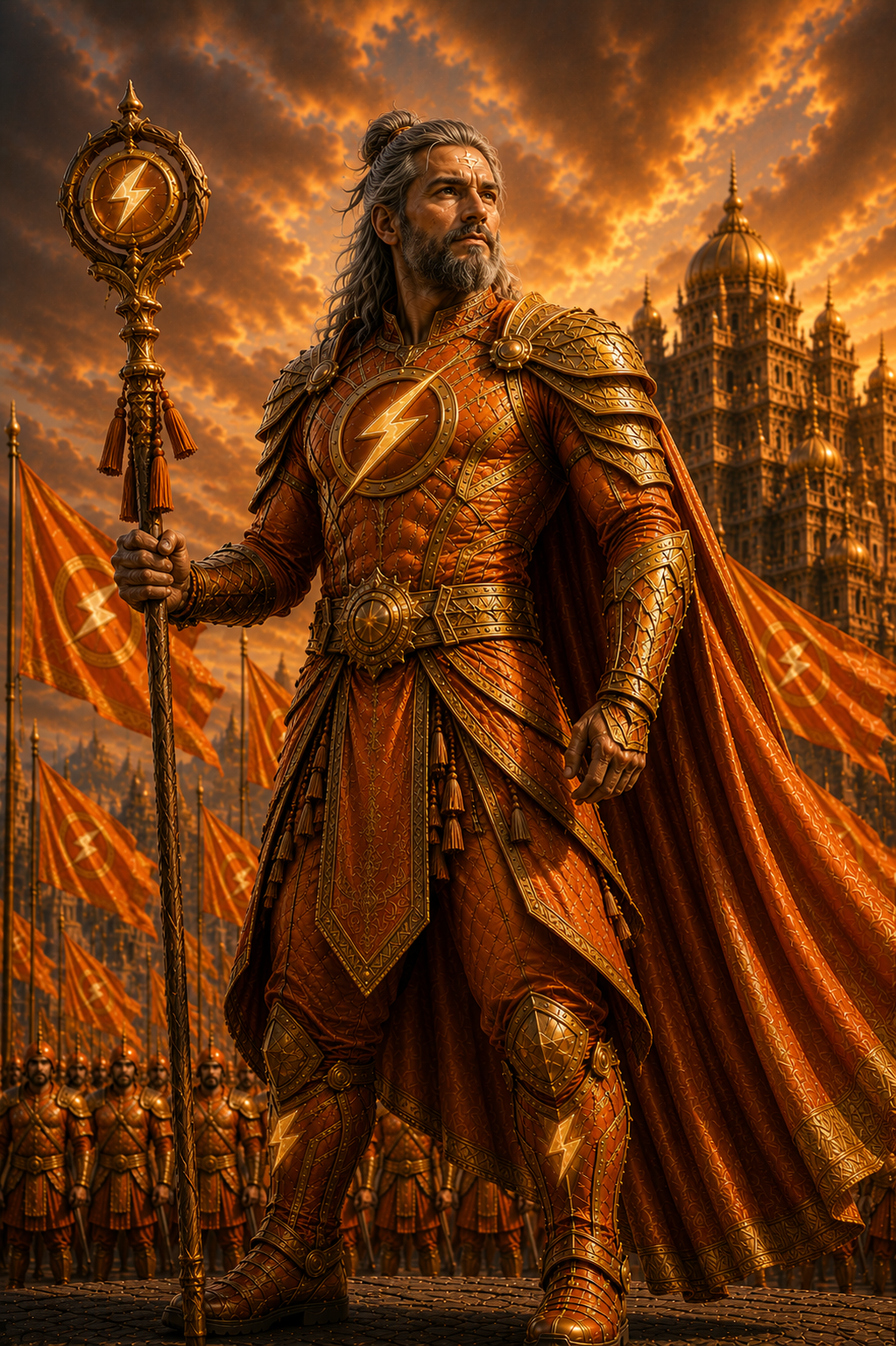
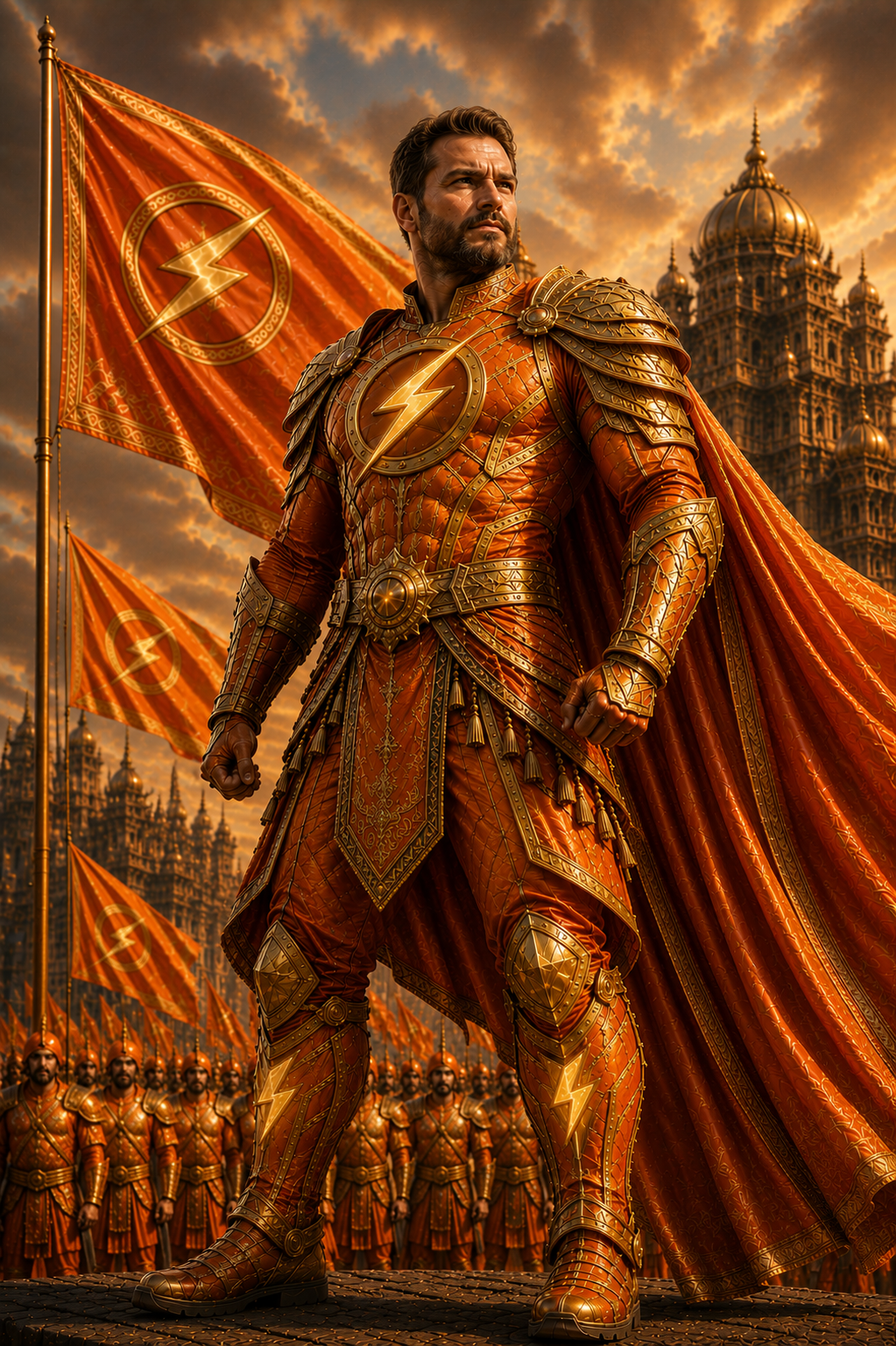
Pumbus is the founding commander of AAHA’s army and the visible shield of the kingdom. He has a disciplined military appearance, very short orderly hair, a neat beard, and a face clearly different from Manuki. His Rajya-Shastra emphasizes Danda, deterrence, readiness, lawful punishment, and commanders leading from the front. He is fierce toward danger, dependable toward friends, and protective toward citizens. His office is merit-based and may one day pass to another commander who must continue the Pumbus doctrine.

Seat in the Rajsabha
The character remains in the permanent order Zuzuk — Rasant — King Manuki — Pumbus — Japtinja. The seat is never exchanged because it represents an office, not convenience.
Relationships
Manuki, Pumbus, and Japtinja share a lively warrior friendship. Pumbus and Japtinja compete with Zuzuk and rarely mingle easily with him. Zuzuk works closely with Rasant on art, archives, research, and the library. All four deeply respect Rasant.
Legacy of the Office
The individual may one day be replaced, but the office, its books, its training, and its Rajya- Shastra continue under the crown.

Place in AAHA
Pumbus's Rajya-Shastra belongs to the wider structure of Knowledge, Prosperity, and Power. It must be understood in relation to the crown, the four principal offices, the advisory houses, and the Aahans.
Connection to the Living Triangle
The knowledge side is carried by Zuzuk and Rasant; prosperity is governed by King Manuki through the Royal Bank of AAHA, the Crown Treasury, the golden currency, and national reserves; and the power side is carried by Pumbus and Japtinja.
Law, Discipline, and Responsibility
AAHA never treats authority as decoration. Every title, symbol, weapon, office, bank, archive, or seat carries limits, records, and responsibility for consequences.
Public Meaning
The purpose of Pumbus's Rajya-Shastra is ultimately measured through the safety, dignity, prosperity, knowledge, and trust of the Aahans.
Continuity Across Generations
The current heroes begin the system, but the kingdom is designed to outlive them. Offices, books, training, symbols, institutions, and lawful succession preserve their lessons.
Connection to King Manuki
King Manuki remains the final human authority within this subject. He stands at the centre of the Living Triangle, listens to the relevant offices, directs prosperity, and accepts the consequences of the final royal choice.
Connection to the Golden Panch
The fixed order is Zuzuk — Rasant — King Manuki — Pumbus — Japtinja. The five do not share identical authority, but their different minds allow AAHA to examine the same problem through justice, defence, security, wisdom, strategy, and prosperity.
Connection to the Aahans
The final purpose is service to Aahans, meaning Aaha ke ansh: living parts of AAHA. A system that appears powerful but weakens citizens has failed the meaning of AAHA.
Canonical Principles
Five minds. One kingdom. One throne.
Living Triangle: Knowledge, Prosperity, and Power
Divine Flow: Vaishno → Narsimha → Hanuman → the Supreme Sage → Rasant → King Manuki
Fixed Order: Zuzuk — Rasant — King Manuki — Pumbus — Japtinja
Power must protect. Prosperity must serve. Knowledge must guide.
Pumbus's Rajya-Shastra belongs to a world in which power must protect, prosperity must serve, and knowledge must guide. Its meaning is complete only when it strengthens the Aahans, preserves the responsibility of the crown, and keeps every form of action within the disciplined circle of Zebolt.